

What can you (really) put in your compost?
Understanding why not everything can be composted
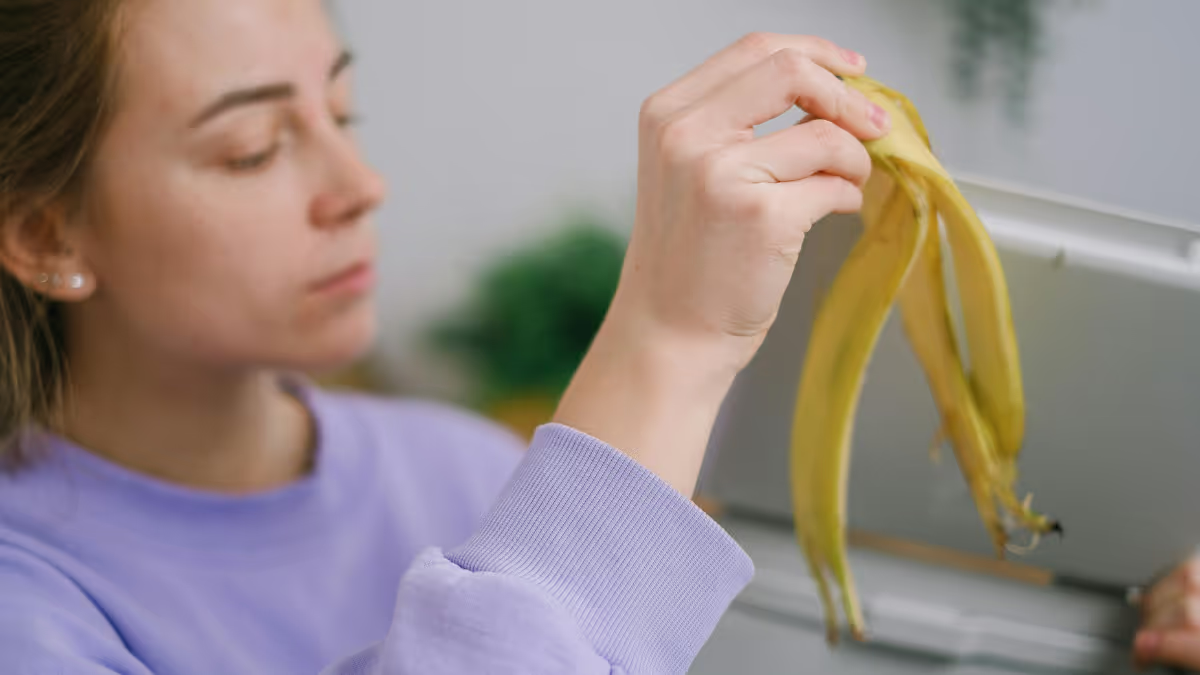
You've installed a compost bin in your garden or kitchen, and now every meal brings a new question: "Can I put this in the compost?"
Avocado skins, eggshells, melon scraps, tea bags, paper towels, cheese rinds... There are many questions and the answers are not always clear.
Because composting is not just a matter of emptying your kitchen bin into a corner of the garden. To compost properly, you need to understand how the process works and, above all, what the microorganisms that transform your waste into humus are looking for—or avoiding. Good compost depends on a certain balance. And while some organic waste can be added without any problems, other types can slow down decomposition, disrupt the process, or even cause problems.
This article aims to help you understand the process, without jargon or moralizing. You will find:
- The key principles for understanding what happens in a composter (the version for beginners and the version for experts)
- What you can put in it, and why
- What is best to avoid, and for what reasons
- A comprehensive alphabetical list of the main types of everyday waste, with a clear answer: compostable or not?
Whether you're new to composting or already an expert, this guide will help you improve your practices—or simply stop wondering every time you peel a carrot.
Why can't everything be composted?
Composting is based on a well-established biological process: the decomposition of organic matter by microorganisms (fungi, bacteria) and macroorganisms (earthworms, insects, woodlice, etc.).
These living organisms gradually transform your waste into humus, a rich and stable material that can be returned to the soil to nourish life. But this process only works well under certain conditions. And not all waste meets these conditions.
Three main factors influence the quality of compost:
- The balance between carbon and nitrogen
- Compost aeration
- Moisture
An imbalance in any of these three areas can slow down decomposition, create unpleasant odors, or even render the compost unusable.
The carbon/nitrogen ratio: the key to balanced compost
We often talk about "dry" and "wet" waste, or "brown" and "green" waste. Behind these terms lies a fundamental ratio in composting: the C/N ratio, i.e., the proportion of carbon (C) to nitrogen (N) contained in the composted material.
Carbon is the energy source for microorganisms. It is found in dry materials: dead leaves, shredded branches, untreated paper, brown cardboard, sawdust, etc. Nitrogen accelerates microbial growth. It is mainly found in wet, rich materials: peelings, food scraps, grass clippings, coffee grounds, etc.
To work properly, compost needs a C/N ratio of between 25:1 and 30:1. In other words, it needs much more carbon than nitrogen. If this ratio is unbalanced:
- Too much nitrogen? The compost becomes too wet, smells of ammonia or rot, and fermentation takes over from decomposition.
- Too much carbon? The compost dries out, slows down, and the microorganisms lack the nutrients they need to develop.
Remember: if your compost is too wet, add brown materials (dead leaves, cardboard). If it is too dry or too slow to transform, add fresh materials.
Aeration: compost needs oxygen
Home composting is an aerobic process, meaning that it requires oxygen to function properly. In the absence of air, other microorganisms, known as anaerobic microorganisms, take over... but their activity produces methane, fermentation odors, and slows down decomposition.
Good aeration allows:
- Bad odors to be avoided
- The transformation of materials to be activated
- The formation of juice or compacted areas to be avoided
In concrete terms, this means that you must:
- Stir your compost regularly (every 10 to 15 days)
- Avoid overloading it with very wet waste or thick layers (fresh grass, for example)
- Alternate brown and green layers to promote an aerated structure
How to manage the moisture content of your compost?
Moisture is essential: microorganisms thrive in a moist environment, not a dry one. But too much water can displace air and create an anaerobic environment. The goal is to maintain a moisture level comparable to that of a wrung-out sponge.
Compost that is too dry will not decompose. Compost that is too wet smells bad. Common sources of excess moisture:
- Too much fruit, vegetables, or cooked food thrown away without adding dry materials
- Lack of absorbent brown materials (paper, cardboard, leaves)
- Poorly designed lid on the composter (poor water drainage or rainwater infiltration)
Good habit: every time you add fresh material, remember to add brown material. If you empty a bowl of peelings, add a handful of cardboard or dead leaves on top.
What types of waste can cause problems when composting?
Not all organic waste is suitable for composting. Some types are too fatty, too acidic, too slow to break down, or pose health risks.
Some examples:
- Meat, fish, dairy products: rich in animal fats and proteins, they attract pests and do not decompose well at room temperature.
- Citrus fruits, garlic, onions: highly acidic or antibacterial, they can slow down the work of microorganisms.
- Diseased plants: they can transmit their pathogens to the compost.
- Printed or bleached paper: contains ink, glue, or chemical treatments.
In industrial composting, which is subject to high temperatures (up to 70°C), this waste can be processed. But in home composting, caution is advised.
Diving into compost: behind the scenes of a microbial banquet
Before looking at what can and cannot be put in compost, it is important to understand one essential thing: compost is not a trash can, it is a living ecosystem, a veritable open-air feast... for billions of tiny invisible mouths. And there are many guests at this banquet: bacteria, fungi, actinobacteria, springtails, worms, mites, nematodes, etc. But let's start with the chefs of this great buffet: microorganisms.
Microorganisms, the invisible workers of compost
Bacteria: first to the table
They are the stars of composting. They arrive in large numbers as soon as new organic waste is added. There are three main categories of bacteria, depending on the temperature they prefer:
- Mesophiles: they thrive between 10 and 40°C. These are the first to get involved. They start the decomposition process as soon as you put peelings or coffee grounds in the bin.
- Thermophiles: these take over when the compost heats up, usually between 40 and 70°C. They accelerate the breakdown of tougher materials, such as cellulose in paper or plant fibers. In home compost, they are most active in summer or in well-balanced volumes.
- Actinobacteria: these rather special bacteria like dry, woody materials. They break down carbon-rich materials (such as dead leaves or cardboard). They are often responsible for the pleasant smell of ripe compost.
Fungi: patient decomposers
Unlike bacteria, fungi are less hurried: they thrive in drier, more acidic conditions. Their specialty? Breaking down complex structures such as lignin and cellulose (found in wood, brown paper, and certain plant fibers). When you see white filaments in your compost, they are often fungi. They are like meticulous craftsmen who take apart a piece of wooden furniture to recover every screw. Slow but extremely efficient.
What about the others?
Earthworms, springtails, woodlice, and rose chafer larvae also join in the fun, especially during the maturation phase. They mix, chew, digest, and transform everything into humus. They are called macroorganisms.
Where do these bacteria and fungi come from?
This is one of the most valuable lessons composting teaches us: nothing is ever completely sterile. Microorganisms are all around us. They find their way into your compost:
- With the waste itself (fruit, vegetables, coffee grounds, eggshells... all of which already carry bacteria on their surface)
- Through the soil (if your composter is in contact with the ground, worms and bacteria can access it freely)
- Through the air (fungal and bacterial spores fly around and settle naturally)
In other words, you don't need to "seed" compost for it to work. It populates itself, provided you offer it a welcoming environment.
Nitrogen and carbon: fuel and structure
Many guides talk about "green materials" and "brown materials," but the real distinction lies in their carbon and nitrogen content. Here's a simple metaphor: imagine that compost is a big barbecue party.
Carbon (C) is the charcoal, the fuel that feeds the fire.
Nitrogen (N) is the meat you put on the grill: it's what the microbes want to eat.
But be careful: without charcoal, the fire won't start. And without meat, it's useless. So you need a good balance between the two.
Concrete examples:
A banana peel: rich in nitrogen → "green" material
A dead leaf: rich in carbon → "brown" material
A piece of torn cardboard: very carbon-rich
Coffee grounds: despite their color, very rich in nitrogen
Dry bread: halfway between, but rather rich in carbon (especially once hard)
To remember:
➤ Microorganisms eat nitrogen...
➤ ...but they need carbon as an energy source to do so.
Why do some foods behave differently?
Observe your kitchen leftovers. A piece of bread will dry out and harden if left on the table for a few days. A banana will soften, turn black, and then give off a fermented smell. Leftover meat will smell very bad. Why?
It's a question of structure and composition:
- Bread is dry, low in fat, and rich in starch → it loses moisture and becomes hard
- Bananas are rich in sugar → bacteria feast on them, the cells burst, and they "melt"
- Meat is rich in protein → it attracts specific bacteria (often anaerobic) that produce very odorous sulfur compounds
Foods rich in nitrogen (proteins, sugars, animal matter) are the first to rot. Dry, fiber-rich foods (paper, leaves, bread, cardboard) degrade more slowly, or not at all if they are too dry or compacted.
What are the risks of unbalanced compost?
If you throw away all your food scraps without adding dry matter, you create an environment that is too rich in nitrogen and too moist. The result:
- Aerobic microorganisms suffocate
- Anaerobic bacteria take over
The result: it ferments, it smells bad, it becomes sticky, and it attracts gnats.
Conversely, if you only add cardboard or dead leaves, your compost will be:
- Too dry
- Slow to start
- Unattractive to bacteria
Result: it stagnates, crumbles, and nothing really happens.
In compost, several elements are involved in ensuring effective decomposition. Carbon provides the necessary energy and structure; it is found in cardboard, paper, and dead leaves, among other things. Nitrogen, found in peelings and coffee grounds, provides essential nutrients for microbes. Mesophilic bacteria are the primary agents of decomposition and act mainly on fresh fruit and vegetables. When the compost heats up and stabilizes, thermophilic bacteria take over and accelerate the process at high temperatures, a typical stage in well-established compost. Actinobacteria, capable of breaking down more resistant materials such as wood, paper, or branches, then continue the transformation. Finally, fungi act as secondary decomposers, attacking mainly harder materials such as wood, paper, or certain tough plants.
Industrial or household compost: what's the difference?
First and foremost, a useful reminder: not everything that is "compostable" can necessarily be composted at home. There are two main types of composters:
Home composters
- Garden composter
- Worm composter
- Apartment composter with or without bokashi
- Variable temperature (15 to 50°C), low volume, no sustained heat build-up
➤ More fragile, sensitive to humidity, sorting errors, and pests
Industrial composters
- High-temperature treatment of biowaste (up to 70°C)
- Rapid degradation, destruction of pathogens, acceptance of certain compostable packaging
The guidelines are not the same. Packaging that is "compostable" in industrial compost may never decompose in home compost.
Compostability: What are the main types of waste?
Raw plant waste: basic allies
Organic waste of plant origin is essential for home composting. Easy to manage, well known, and effective, it is the ideal basis for healthy, balanced compost.
This includes:
- Vegetable peelings
- Damaged fruit
- Coffee grounds
- Tea bags (without staples or plastic)
- Eggshells (crushed if possible)
- Dead leaves
- Wilted flowers
- Stems and tops (carrots, radishes, leeks, etc.)
Tip: Cut them up if the stems are thick or fibrous (e.g., leeks). Citrus peels are compostable, but only in small quantities: they are acidic and degrade slowly.
Raw plant waste: basic allies
This is a point that many people get wrong. Contrary to popular belief, certain cooked foods can actually be added to compost, but under strict conditions. Only vegetarian leftovers that are low in fat and without sauce are suitable. It is essential to avoid dishes containing cheese, meat, excess fat, or overly salty or sweet seasonings, as these disrupt the balance of the compost and attract pests. Leftovers such as pasta, rice or plain potatoes, dry bread, steamed vegetables or pizza crusts without cheese are perfectly acceptable in a home compost bin.
On the other hand, rich or processed dishes such as lasagna, quiches, gratins or cream soups should be avoided at all costs. These foods are too fatty and salty, slow down decomposition, generate unpleasant odors, ferment quickly, and attract pests such as gnats and rodents.
Tip: bury these cooked leftovers in the center of the compost and immediately add brown material (dead leaves, cardboard).
Why avoid animal waste?
They are rich in protein and fat, making them attractive to rodents, flies, etc., and particularly difficult to compost in cold conditions.
- Raw or cooked meat
- Fish, shellfish, shells
- Dairy products (butter, cheese, yogurt)
- Whole or broken eggs
- Fats, sauces, cooking oils
However, there are a few exceptions, such as eggshells (crushed) and small amounts of dairy products in a well-managed or industrial composter.
In home composting, these wastes do not break down well and create health risks.
Why are paper and cardboard essential to your compost?
Dry materials are essential for balancing wet waste. They absorb moisture, promote aeration, and feed actinobacteria. We recommend using:
- Used paper towels (unscented)
- Paper tissues
- Cardboard egg cartons
- Small amounts of newspaper
- Unprinted brown cardboard
- Kraft paper
However, certain components should be avoided, such as:
- Glossy, plastic-coated, or bleached paper
- Scented or colored napkins
- Packaging printed with chemical inks
Tip: tear into small pieces to speed up decomposition.
Bioplastics, 'Compostable' Papers, Microplastics: Beware of Misleading Solutions
The proliferation of so-called 'compostable' or 'bio-based' packaging often leads to confusion. Cardboard cups, kraft bags, salad trays, and 'organic' tea bags promise to be 'eco-responsible,' but not all are suitable for home composting.
Moisture-Resistant Papers and Cardboards
Many 'cardboard' packages are actually coated with a thin plastic film (polyethylene, polypropylene, etc.) to make them moisture-resistant. This is the case, for example, with:
- Hot beverage cups
- Food trays
- Fast-food containers
- Certain tea or herbal infusion bags
However, these films do not degrade in a home compost bin. They can fragment into microplastics, contaminating the final compost.
Bioplastics: How Effective Are They Really?
Bioplastics are plastics derived from plant-based materials (corn starch, sugarcane, etc.) and are sometimes certified compostable according to EN 13432.
However, beware: this standard applies to industrial composting, which involves high temperatures and vigorous aeration. In a home compost bin, these materials degrade poorly, slowly, or not at all. As a result, they remain visible for a long time or fragment without truly being digested.
Microplastics: Why Degraded Does Not Mean Digested
Some materials fragment due to heat or humidity but are not digested by microorganisms. They become microplastics, invisible yet persistent. These residues can contaminate your compost, then your plants, and ultimately the soil and the food chain. Their ecological impact is still poorly understood, but it is advisable to err on the side of caution.
What You Can Safely Compost
Packaging Type: Tea bag with staple
Home Compostable?: No
Why?: Metal + plastic
Packaging Type: Unbleached paper tea bag
Home Compostable?: Yes
Why?: Biodegradable and harmless
Packaging Type: Cardboard coffee cup
Home Compostable?: No
Why?: Plastic film
Packaging Type: 'Kraft' burger box
Home Compostable?: Caution
Why?: To be checked: often coated
Packaging Type: Untreated, non-greasy kraft bag
Home Compostable?: Yes
Why?: Good carbon source
Packaging Type: EN 13432 compostable bags
Home Compostable?: No
Why?: Industrial compost only
Packaging Type: OK compost HOME bags
Home Compostable?: Caution
Why?: To be tested, but sometimes disappointing
Packaging Type: Starch-based film (corn, cassava...)
Home Compostable?: Caution
Why?: Degrades slowly, not always digested
Plants, Leaves, and Flowers: Why Be Mindful of Exceptions?
When composting, it is beneficial to include the following plant materials:
- Dead leaves
- Garden waste
- Wilted plants
- Cut flowers
However, the following items should be avoided:
- Diseased or infested plants (risk of spreading pathogens)
- Thick or waxy leaves (e.g., laurel, oak): very slow to degrade
- Pesticide-treated plants
Tip: if in doubt, let the plants dry for a few days before composting them.
However, there are a few specific cases to be aware of. Citrus fruits are compostable, but in moderation, as they can become too acidic in excess.
Onions and garlic are also compostable, but should be limited due to their antibacterial properties.
Avocado skins and pits are not compostable, or degrade very slowly, because they are too tough.
Generally, fruit pits take a very long time to degrade: between 2 and 5 years.
Wood ashes can only be added in small doses, as they are very alkaline.
Wood chips are compostable if they are untreated.
Succulents, such as aloe, should be added with caution as they are very moist and decompose slowly.
Frying oil should not be composted: it suffocates microorganisms.
Finally, natural textiles can theoretically be composted, but very slowly; it is recommended to cut them into smaller pieces beforehand.
Frequently Asked Questions
What can you put in a garden composter?
You can put kitchen waste (peelings, fruit, vegetables, coffee grounds, etc.), dry materials (cardboard, dead leaves), but avoid dairy products, meat, fish, or plastics.
What foods should not be put in compost?
Avoid meat, fish, dairy products, very fatty or salty cooked dishes, and anything that has been chemically treated or contains plastic (e.g., tea bags with staples).
Can citrus fruits be put in compost?
Yes, but in small quantities. Their acidity can slow down decomposition and disrupt microorganisms. Cut them into pieces if possible.
What should you do with paper towels and tissues?
If they are unscented and uncolored, you can compost them. They provide carbon and help balance the moisture content of the compost.
Are compostable bags (EN13432 or OK Compost) really compostable?
Some are, but only under industrial conditions. Only bags certified as OK Compost HOME will break down in a home compost bin—and even then, slowly.
Where can I find a list of what can be put in a composter?
The comprehensive list of what you can (and cannot) put in your composter is available here.