
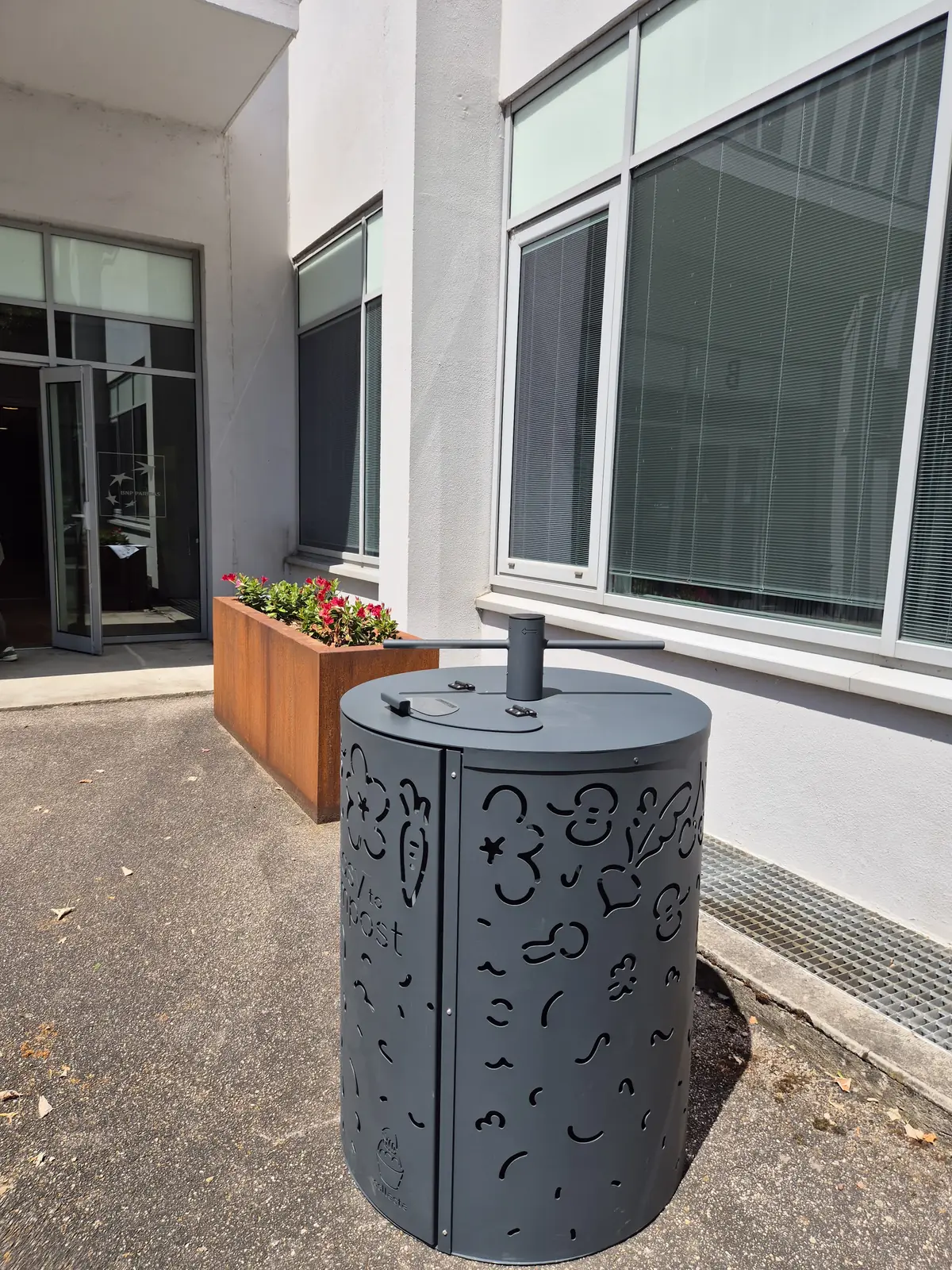
The ABC composter,
part by part
Four years of research in mechanics and biology. An aeration chimney that aerates, a mixing screw that mixes, a vessel that empties. The rest takes care of itself.
- Aeration: air right to the core of the material
- Mixing: two minutes on the crank each week
- Emptying: the compost comes out at the bottom, nothing to dismantle
The product in figures
The essentials, before the detail
Made in France
Our composters come out of our own workshop
French steel and Douglas fir. Cutting, welding, coating: it all happens in Albert, in northern France. And the finishing is done by hand, part by part.
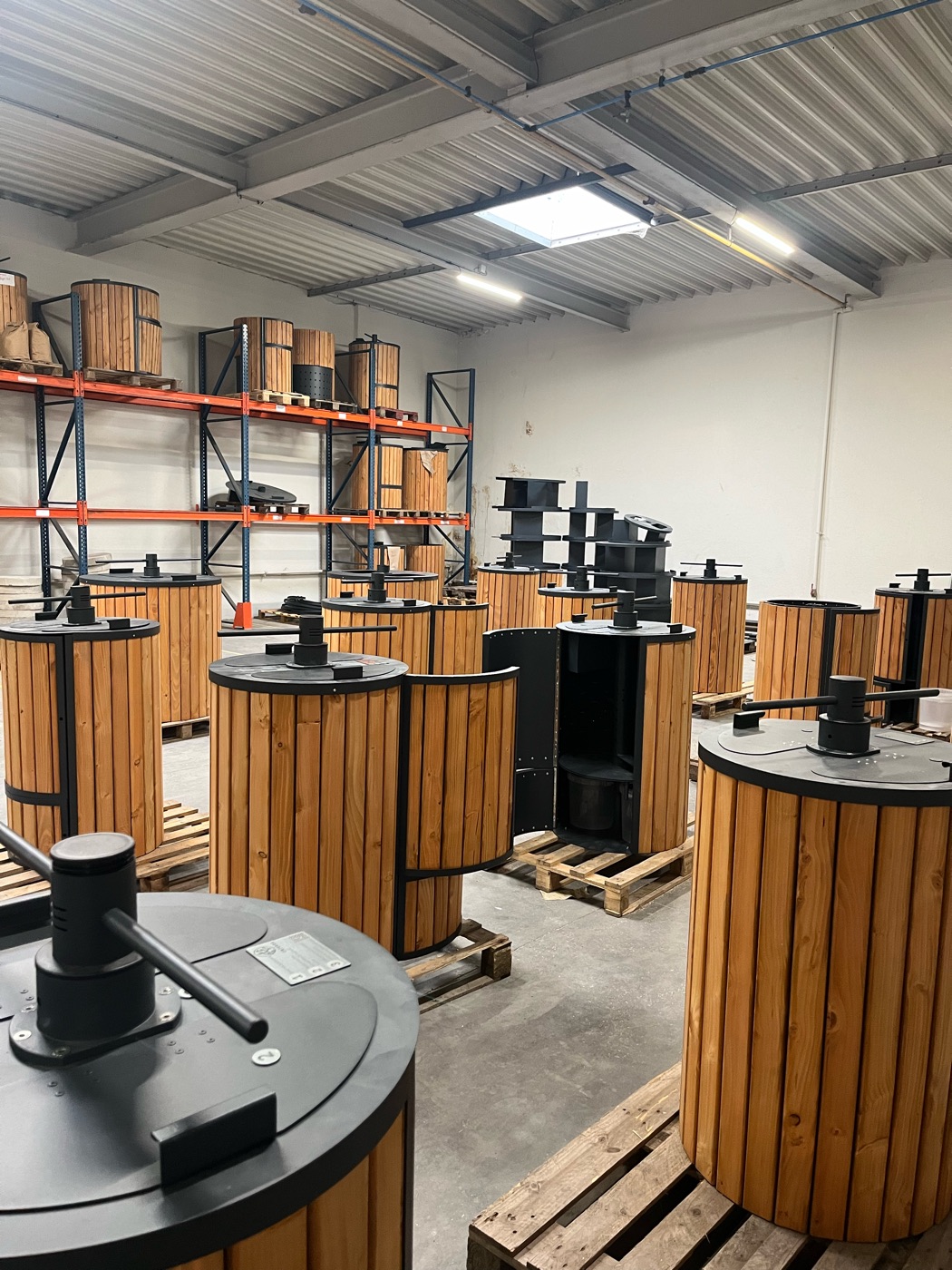

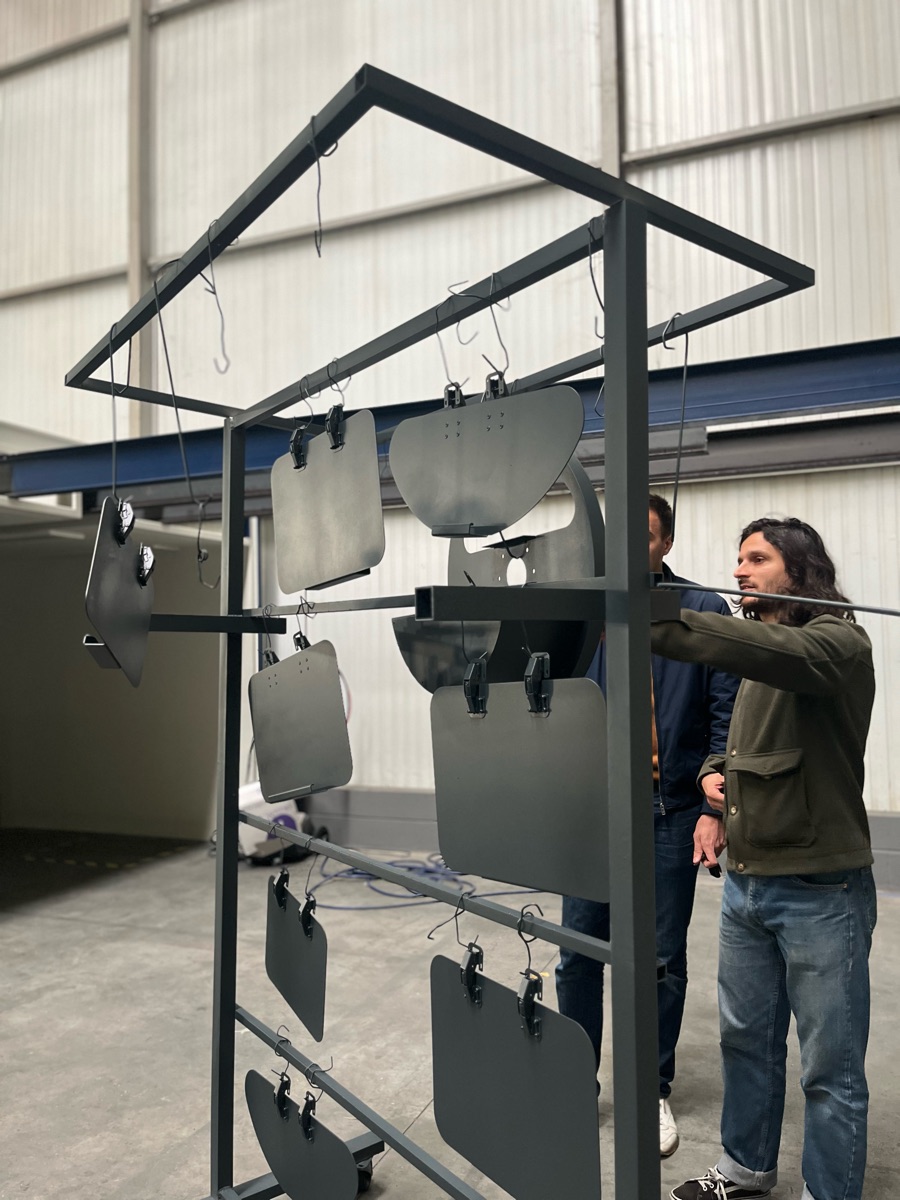
- French materials. S235 steel and Douglas fir, sourced in France.
- Everything under one roof. Cutting, folding, welding and painting in the same workshop.
- Hand-finished. Every composter is gone over and checked part by part.
- Four years of R&D, a design of our own. The aeration and mixing mechanism belongs to us.
First mechanism
Aeration, the key to everything
Compost that smells is compost starved of air. It is the one real problem in composting, and it is the one the ABC composter solves.
How it works
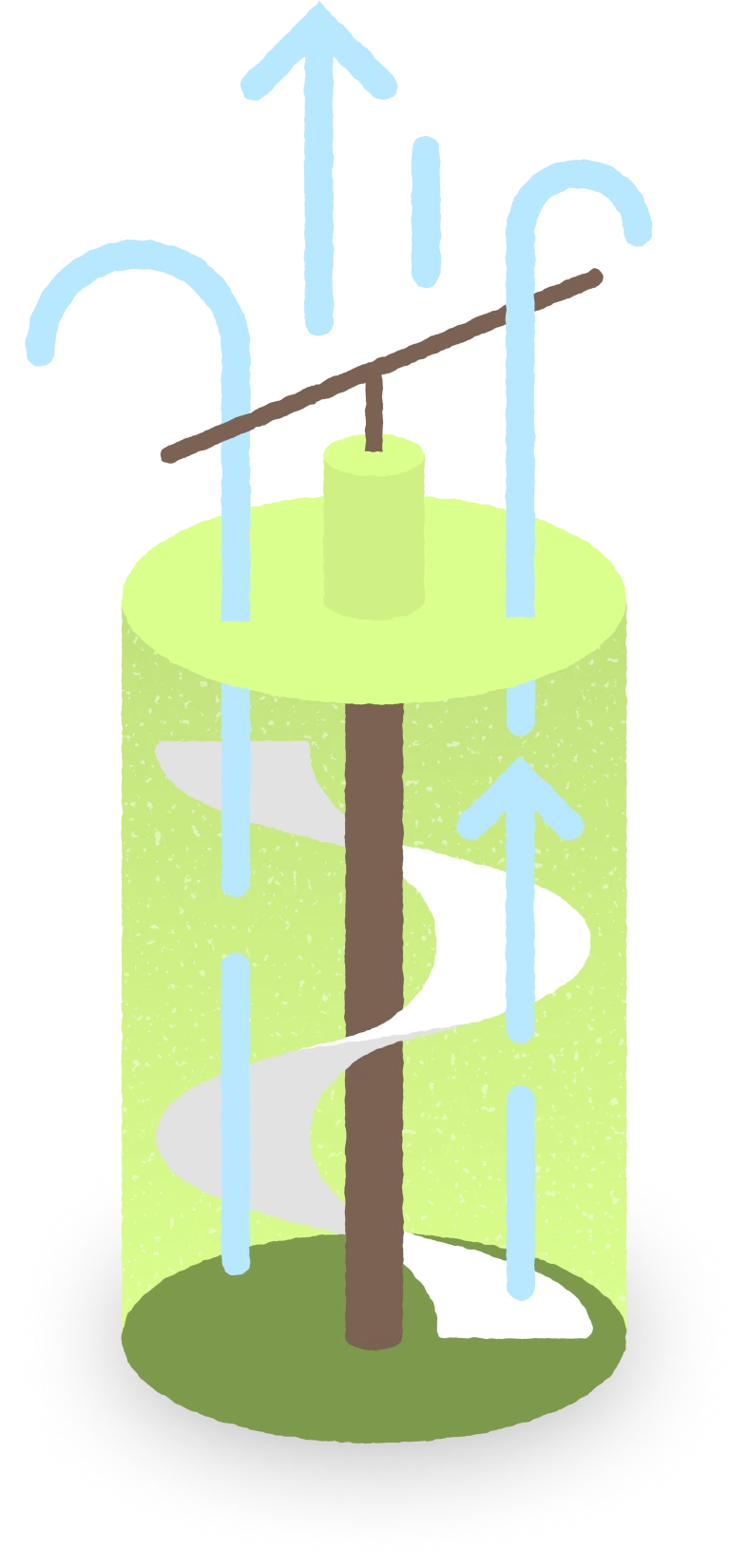
A perforated aeration chimney runs through the vessel
Air enters at the bottom, rises along the aeration chimney and spreads through the material. Fermentation stays aerobic from the first day to the last: that is what keeps the composter neutral, even standing by an entrance.
- No smell. You can put it on a terrace or in a courtyard.
- No standing leachate. The bulking material absorbs excess moisture.
- No power supply. The airflow is natural, and there is nothing to plug in.
Second mechanism
Mixing, two minutes a week
It is the only thing your team has to do. It takes no strength and no training.
How it works
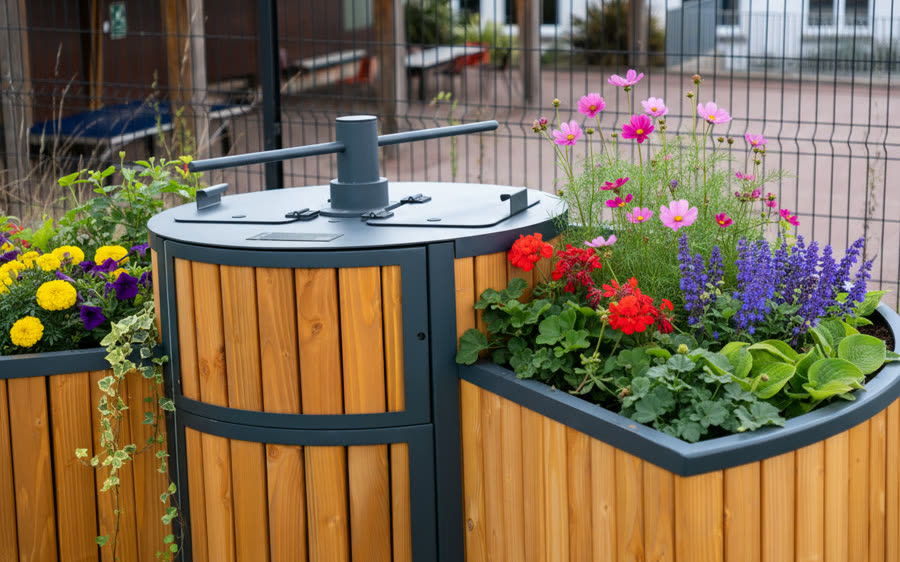
A mixing screw, turned by a crank
One turn of the crank buries the fresh input and mixes it into the material already breaking down. The compost moves forward evenly, with no dead zones and no turning with a fork.
- No handling. Nothing to lift, nothing to move.
- A single action. Anyone can do it, in passing.
- Our own mechanism. The result of four years of development.
Tip in the food waste
Just like an ordinary bin, through the top hatch.
Two or three turns of the crank
The mixing screw buries what you have added. That is the only action.
Nothing else
The bulking material is already in the vessel, loaded at start-up.
Two turns of the crank a week. Even I can manage that. Peazy
Peazy
Peazy
Under the lid
The mixing screw, in its bed of bulking material
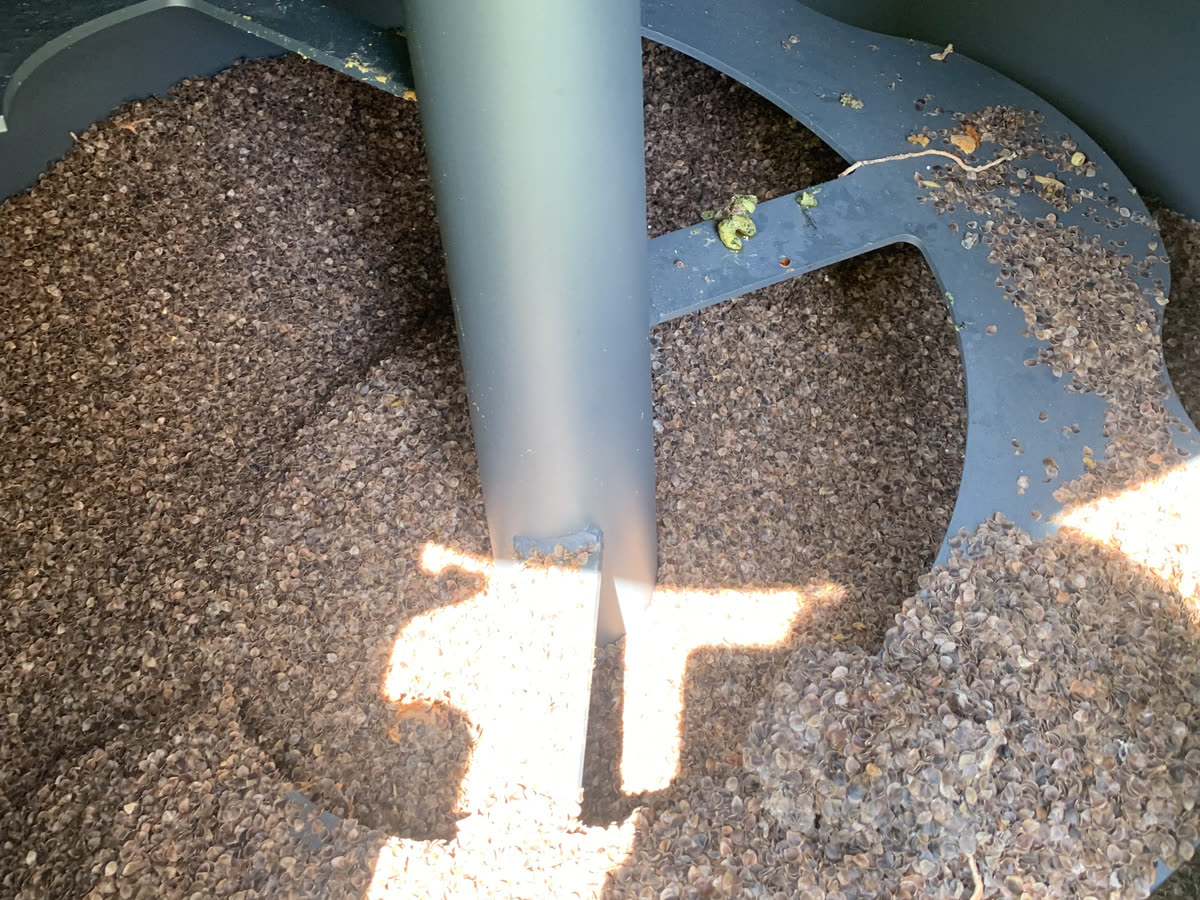
What you would see if you opened it
The pairing that makes the compost
The bulking material is loaded at start-up, as a thick layer at the bottom of the vessel. Day to day, your team never adds any: you tip in your food waste as you would into a bin, give the crank two or three turns, and the mixing screw buries the input into the mass.
- Nothing to add day to day. The bulking material works from the bottom of the vessel.
- No odour. Our own blend absorbs moisture and keeps fermentation aerobic.
- Recharged at each emptying. A thick layer goes back in before the new cycle, and the refill is covered by the rent.
Third mechanism
Emptying, from the bottom, without tools
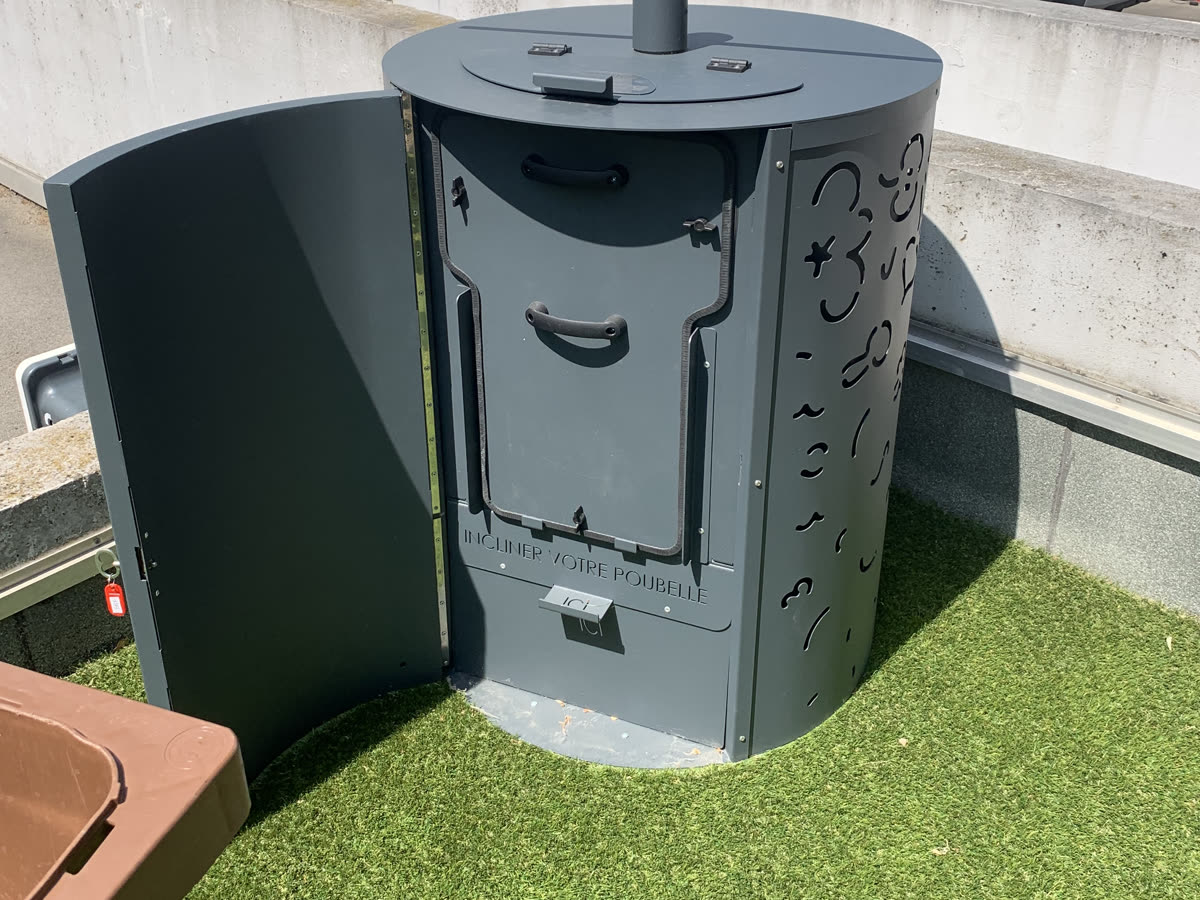
No special container: it empties straight into a standard wheelie bin, through the bottom door.
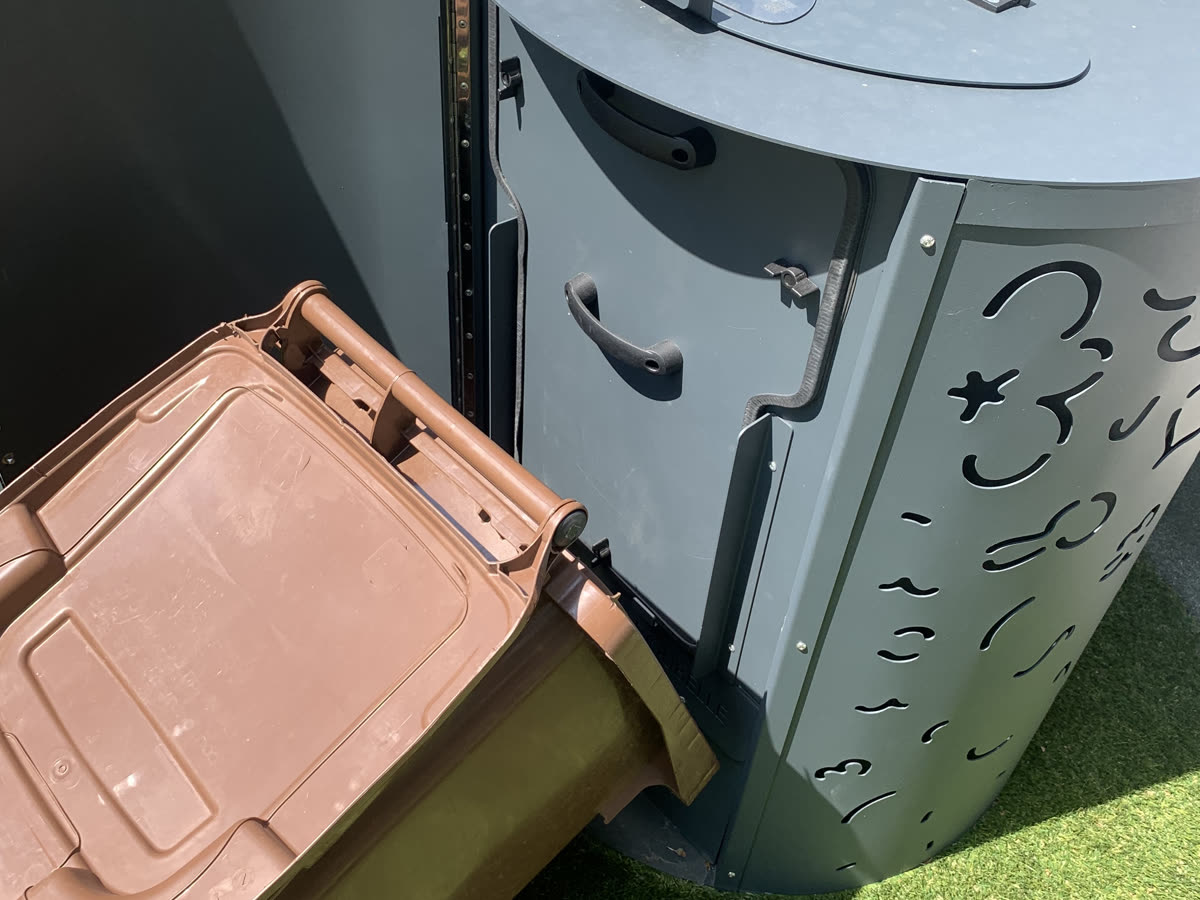
How it works
A 120 L bin, one door, under five minutes
Emptying is designed around the standard 120 L bin used for food waste. You position the bin, open the door and turn the crank: the composted material is pushed into it. Your team, or your waste contractor, does it in under five minutes.
- A standard bin. The 120 L food waste bin, not a proprietary container.
- Under five minutes. By your team or your waste contractor.
- No tools. Position the bin, open the door, turn the crank.
The build
A closed vessel, rodent-proof by design
The question comes up at every site audit, and it is a fair one. The answer is in the build: nothing can get in.

All-steel structure
A fully metal vessel, with no soft panels.
Closed system
Waste goes in through the top hatch, never in the open.
No reachable opening
Unlike garden models, nothing is left open.
Suited to urban sites
Courtyard, car park, terrace: it goes in without any groundwork.
Configurator
Configure your composter, finish included
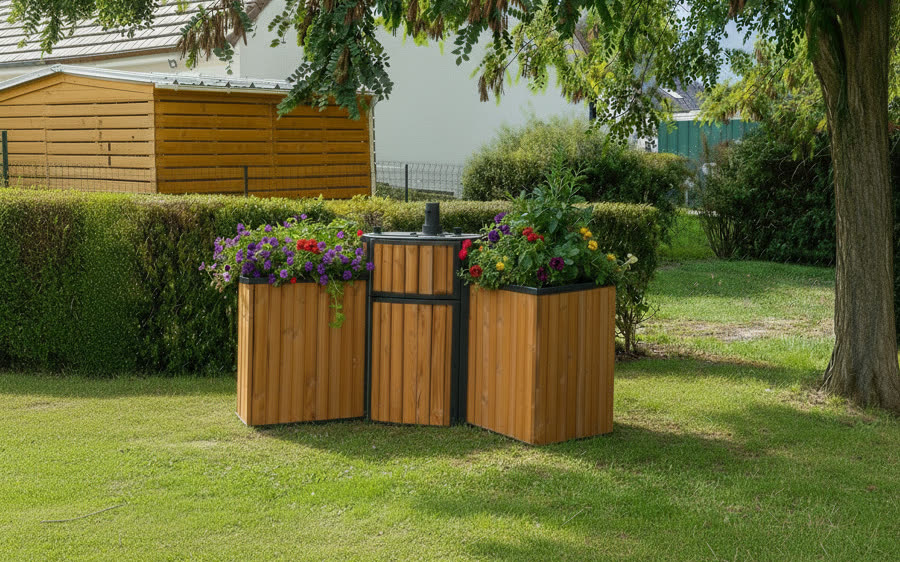
Five colours and the planter option, all at the same scale so you can compare them.
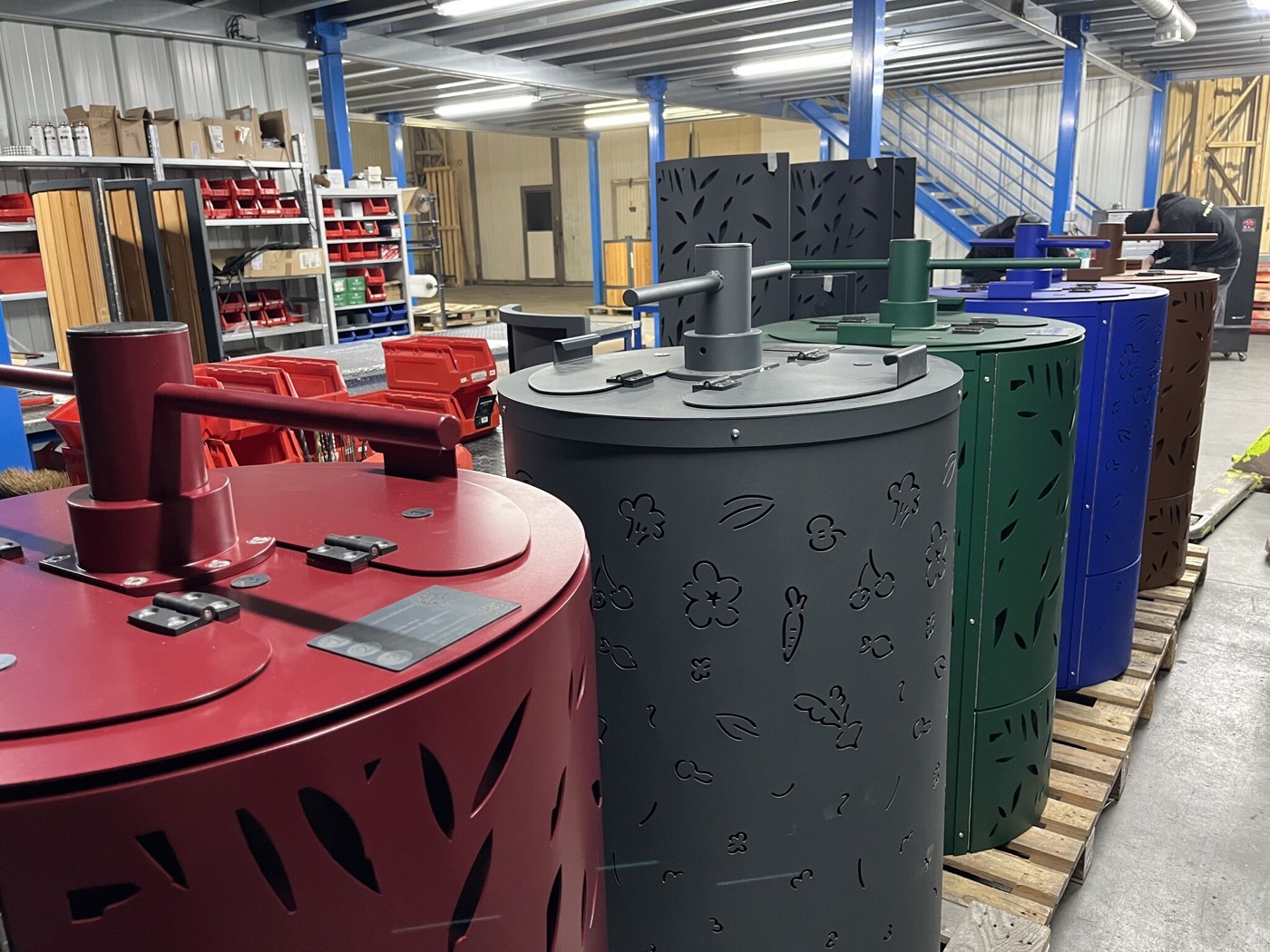
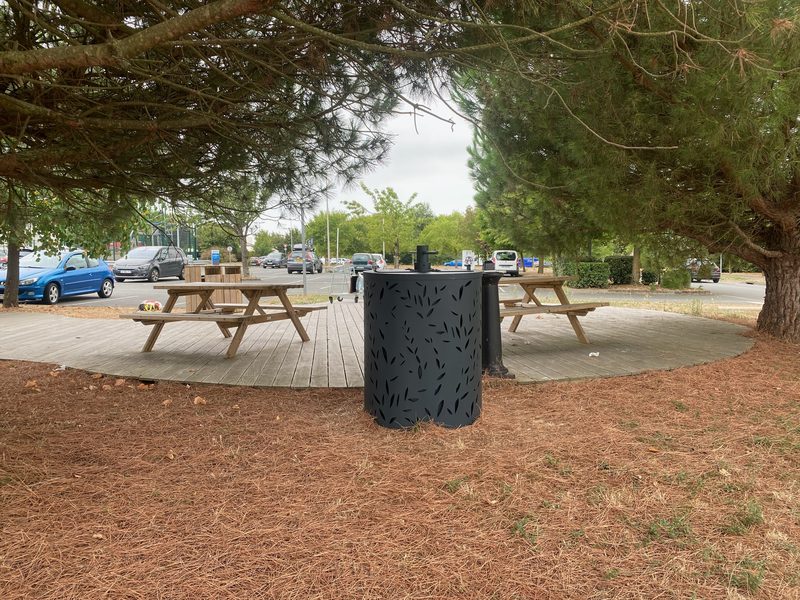
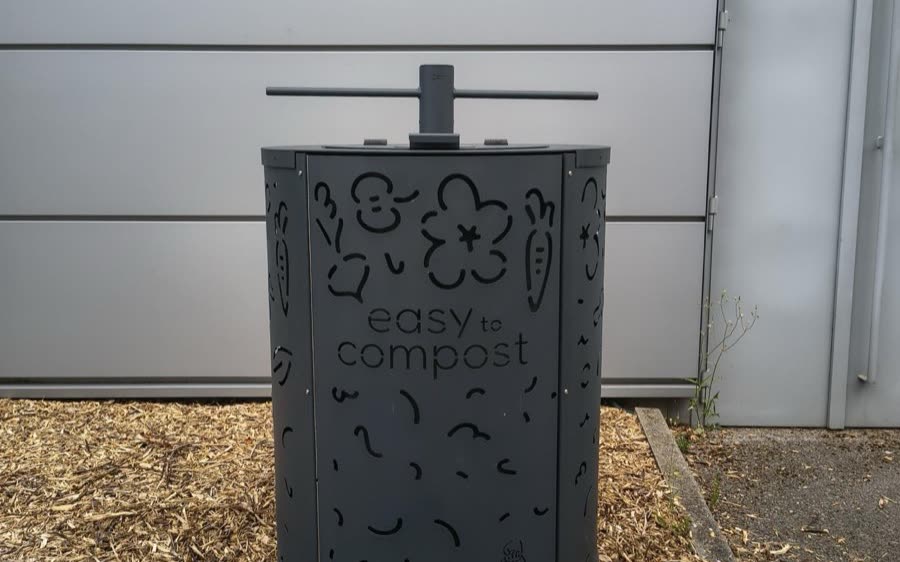
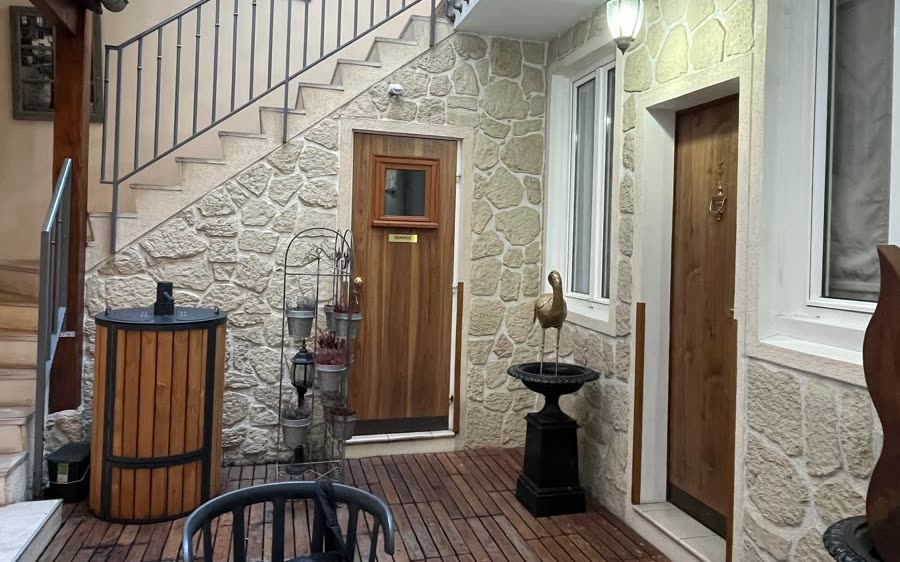
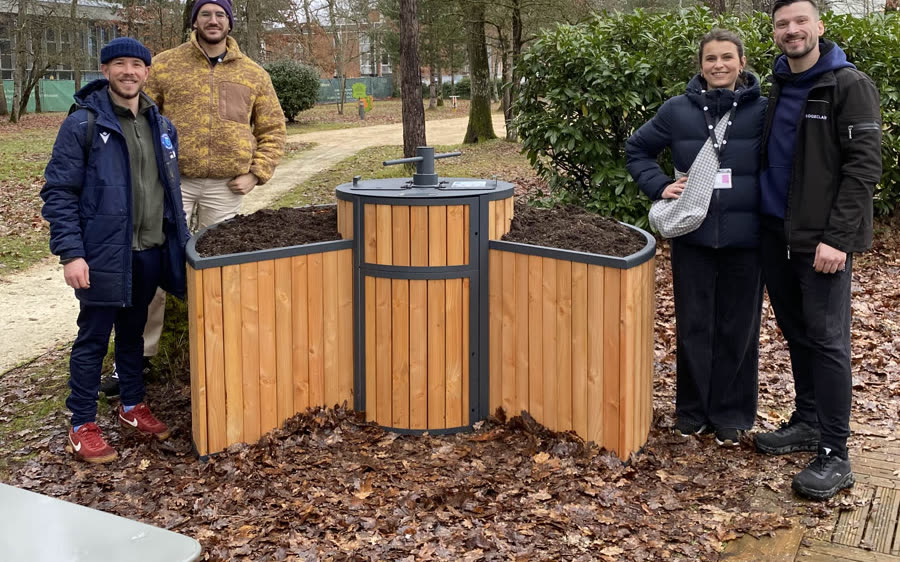
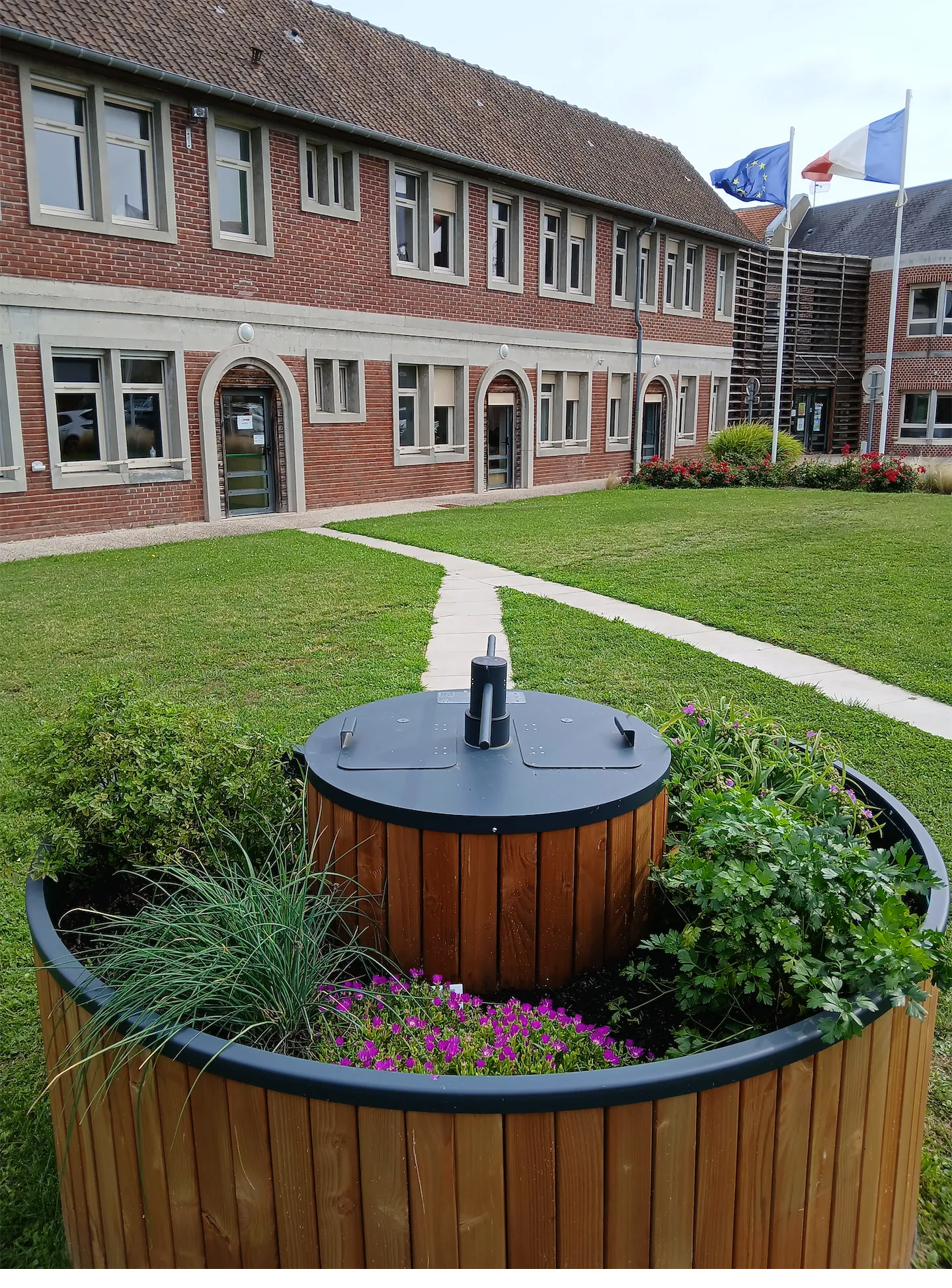
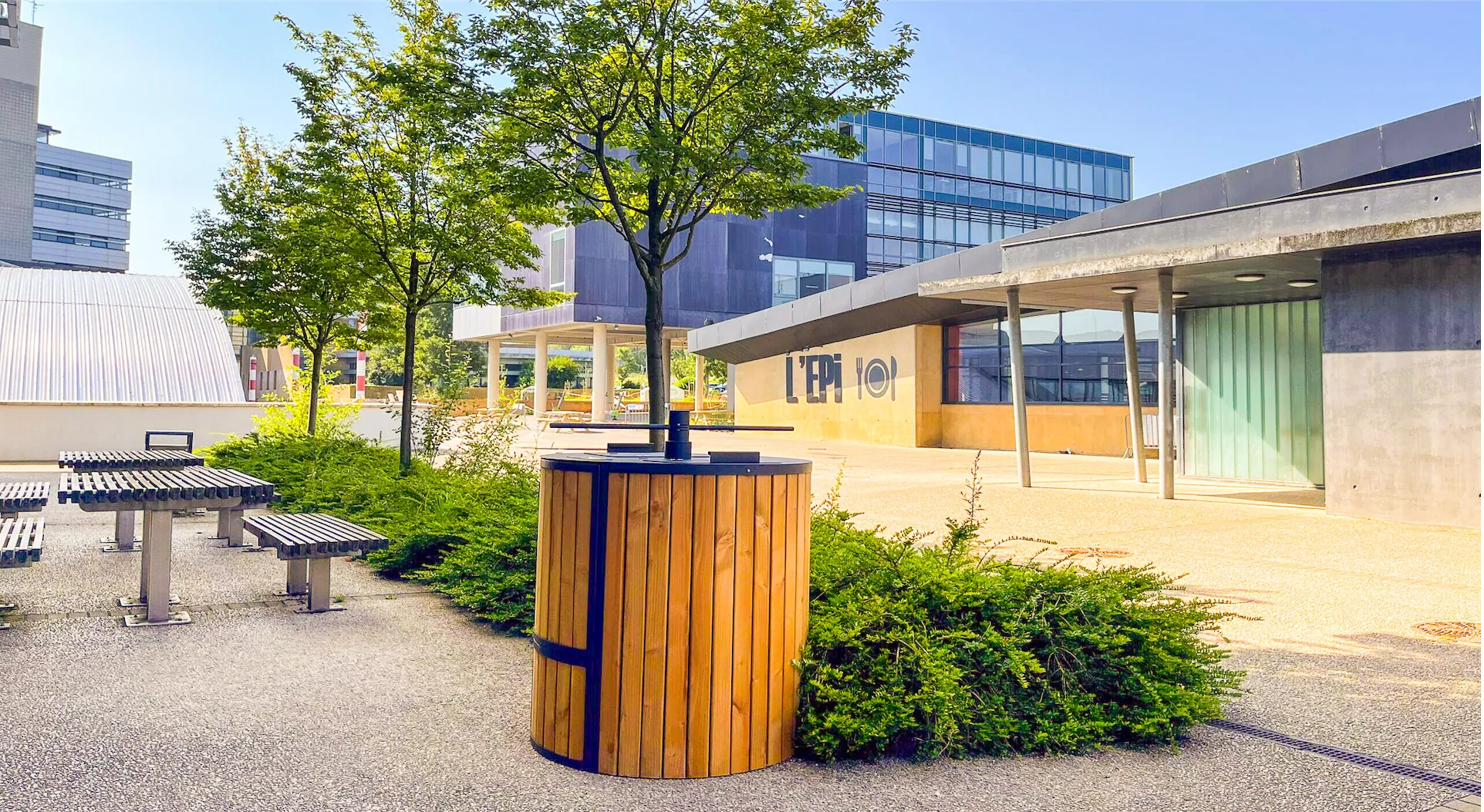
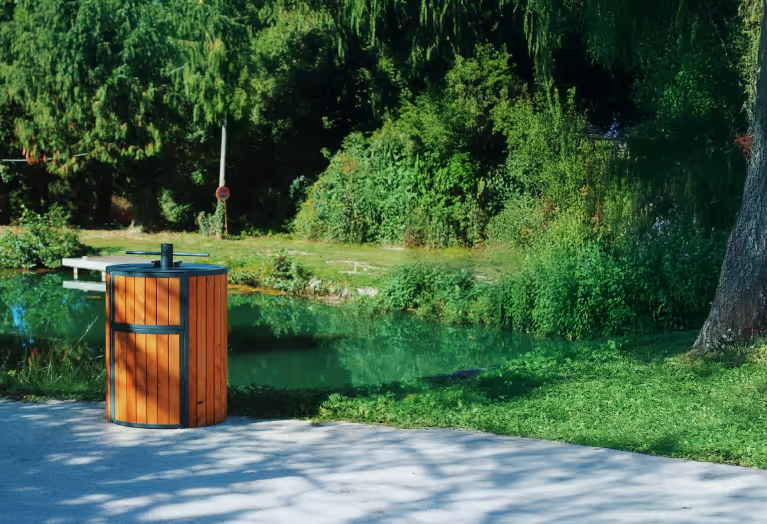
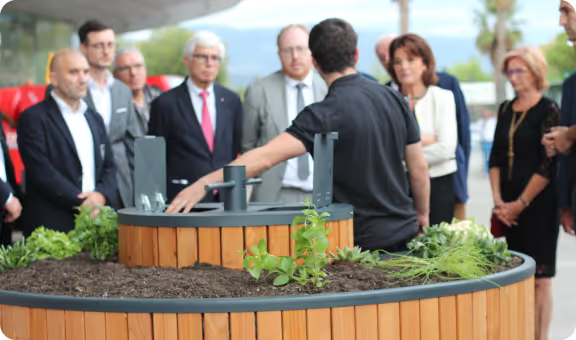
Our installations
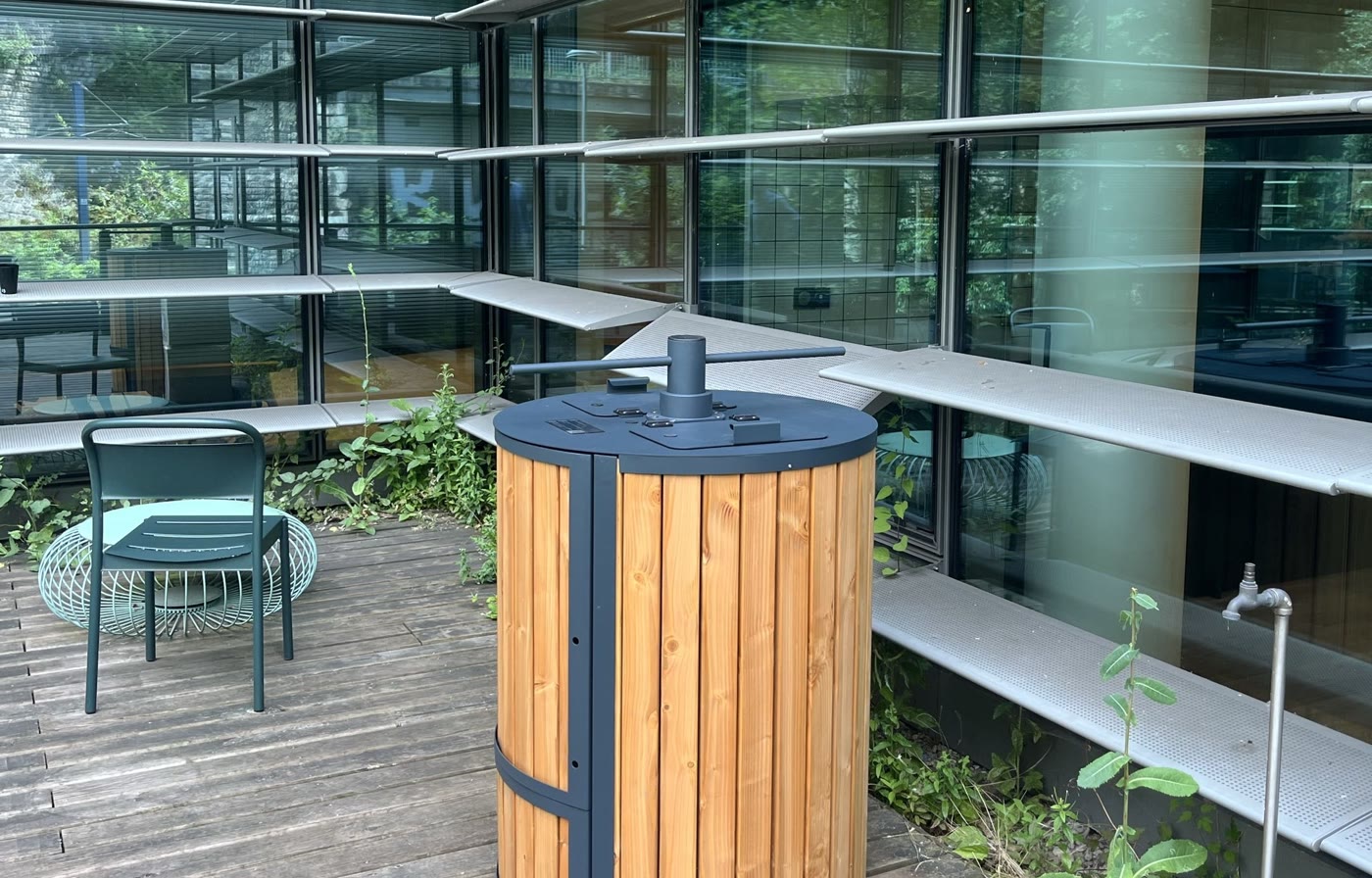
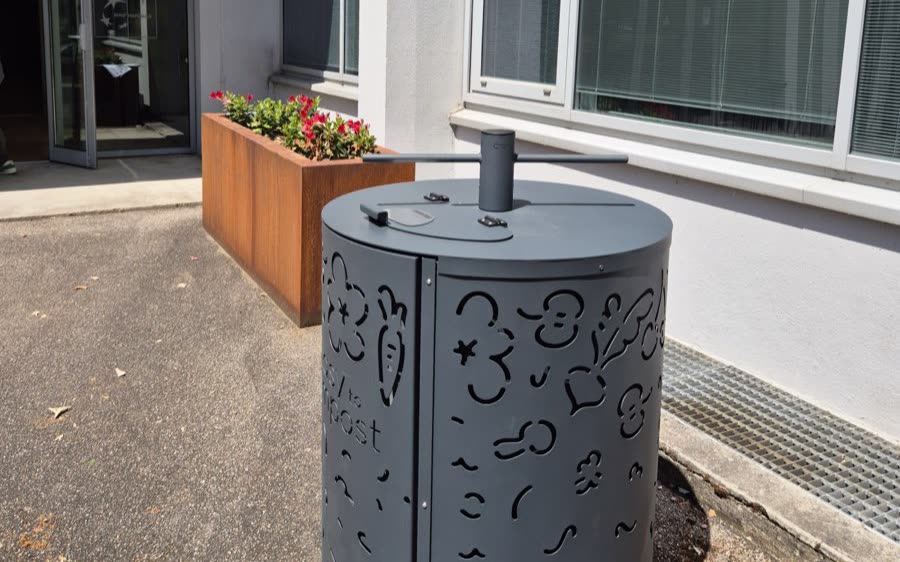
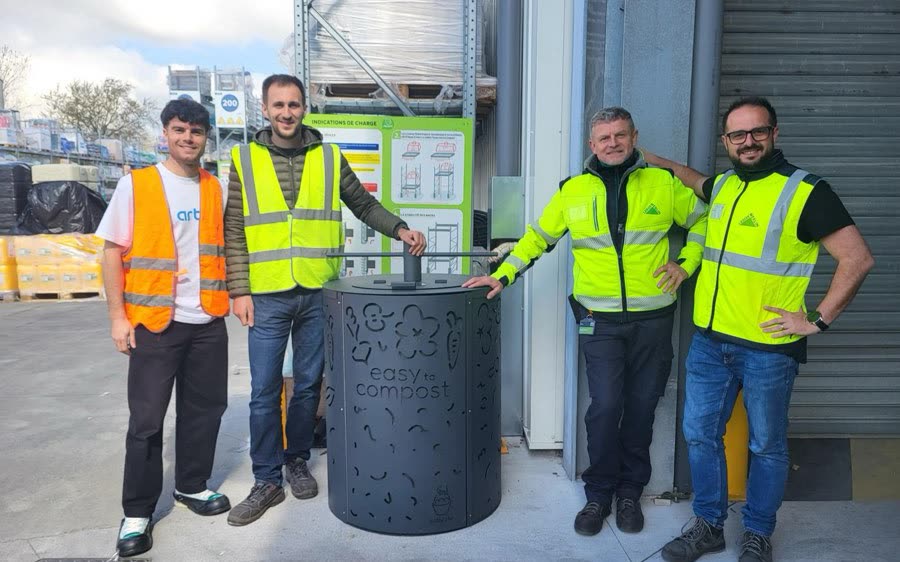
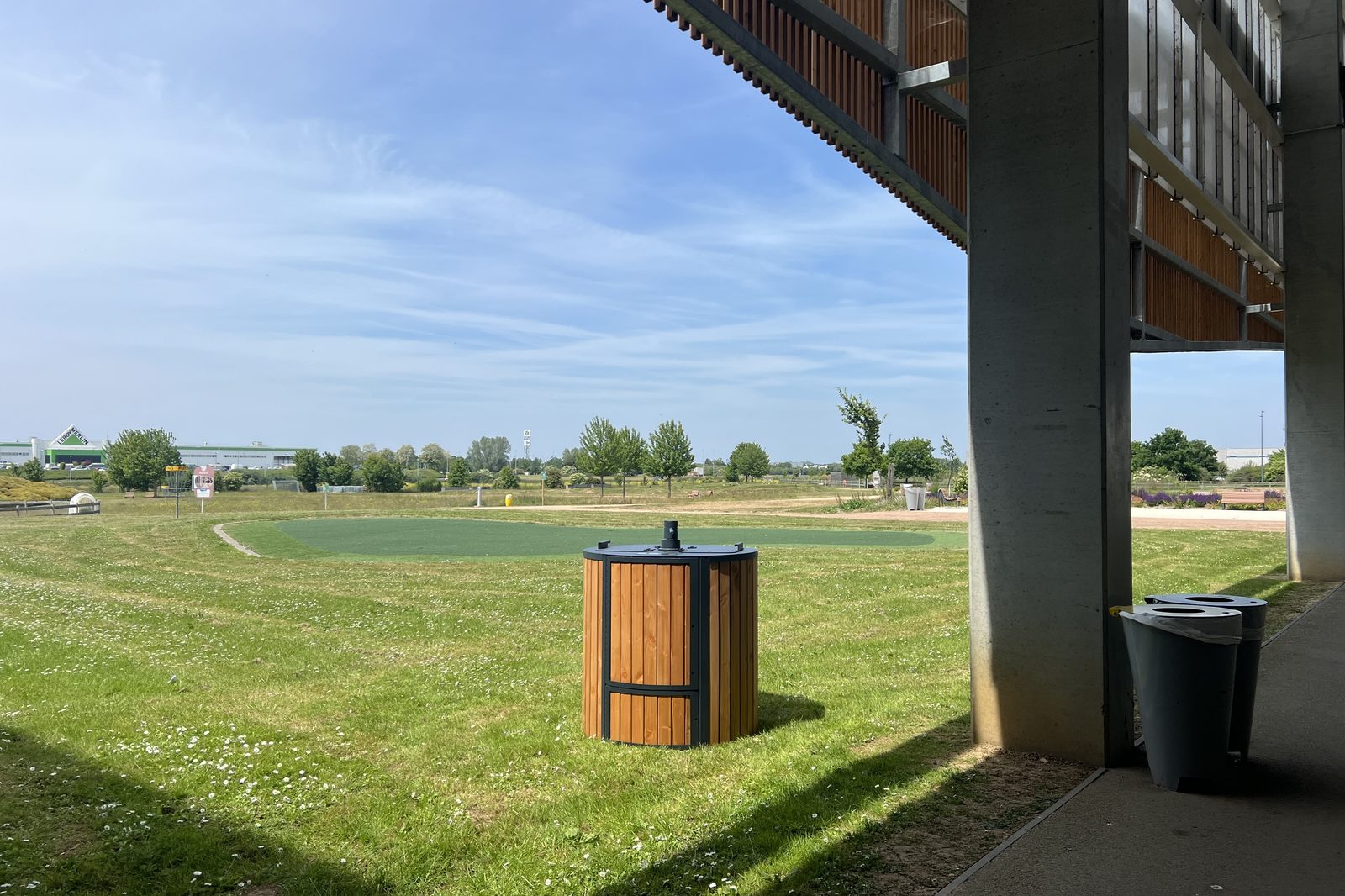
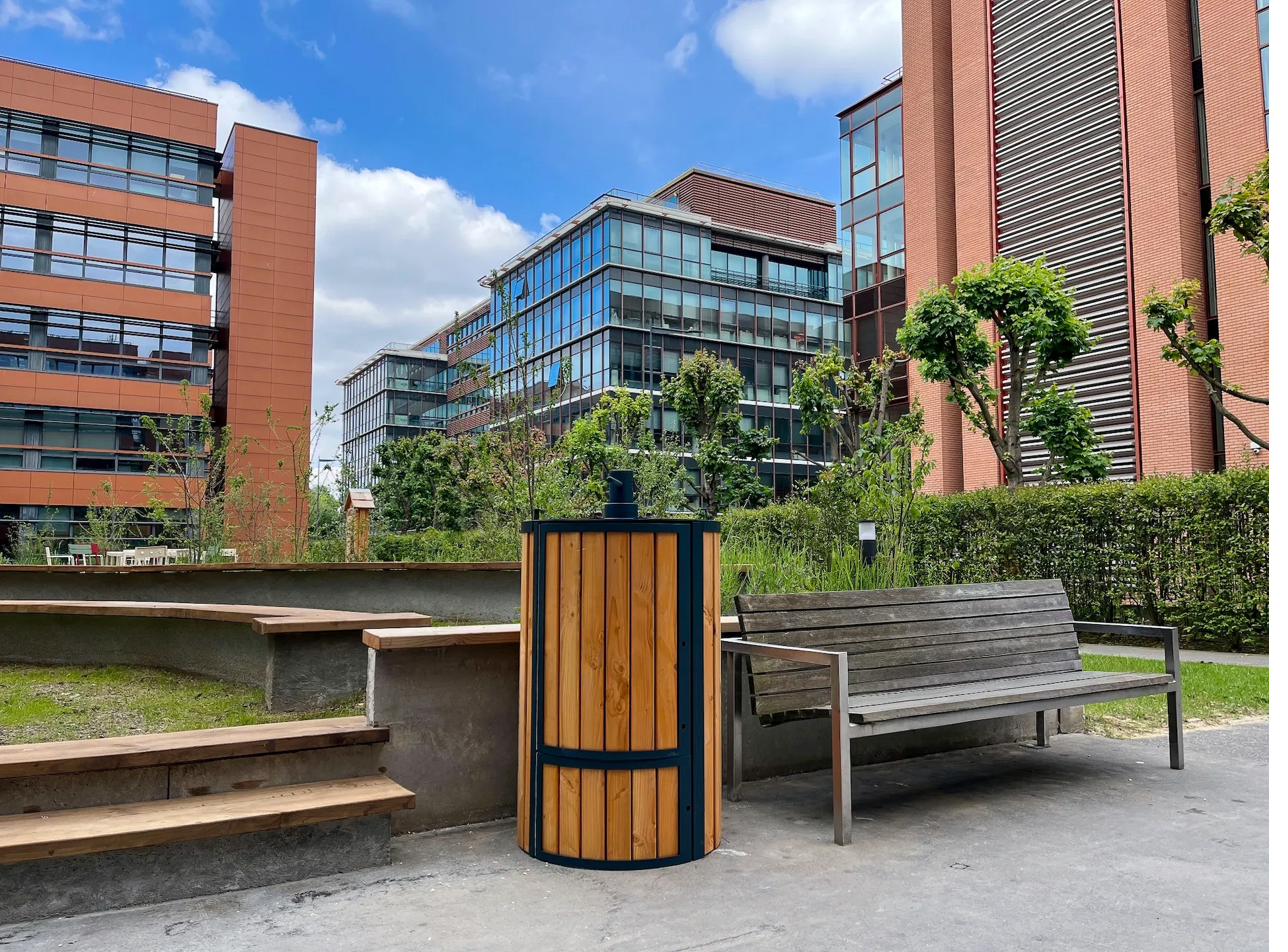
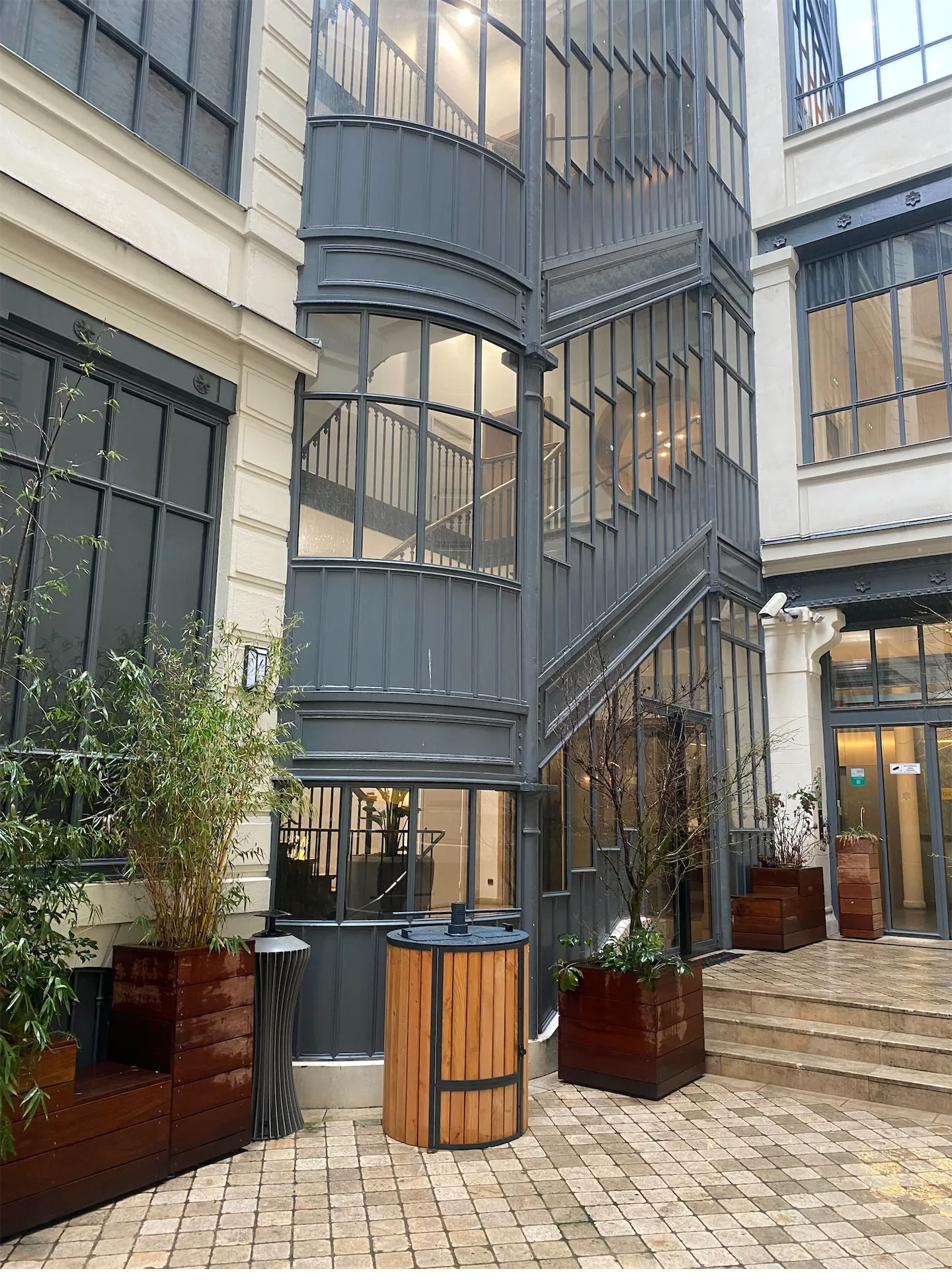
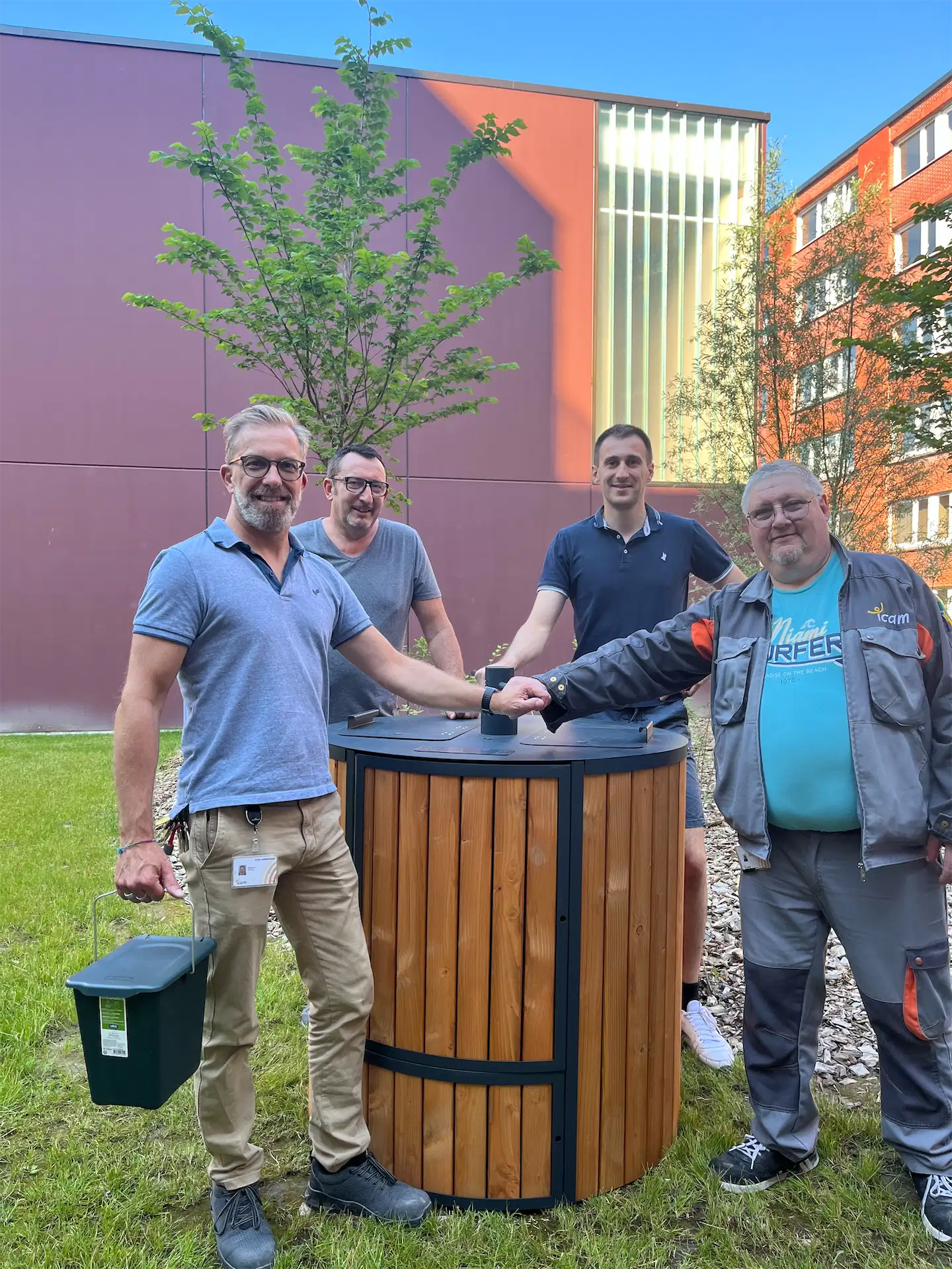
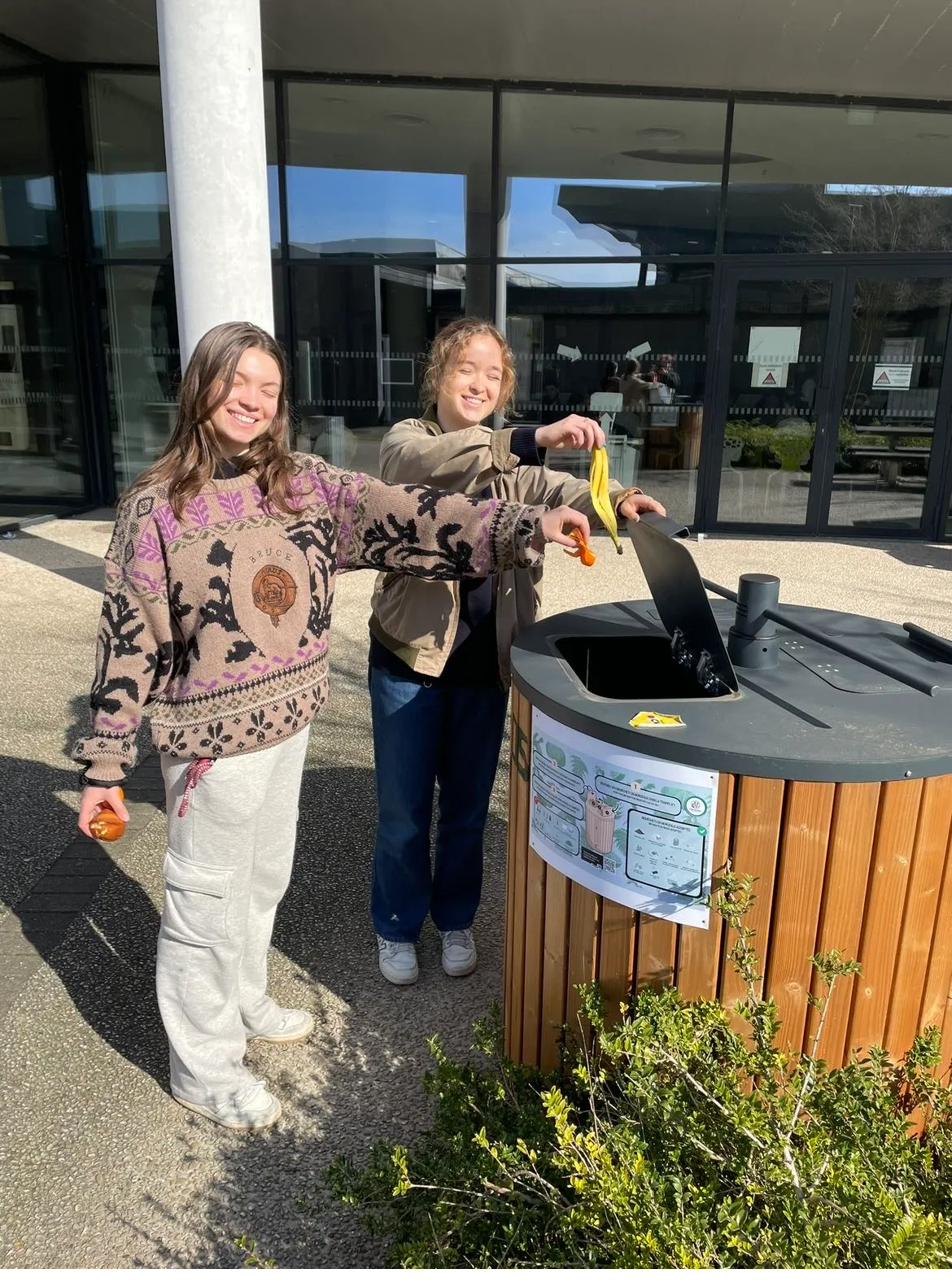
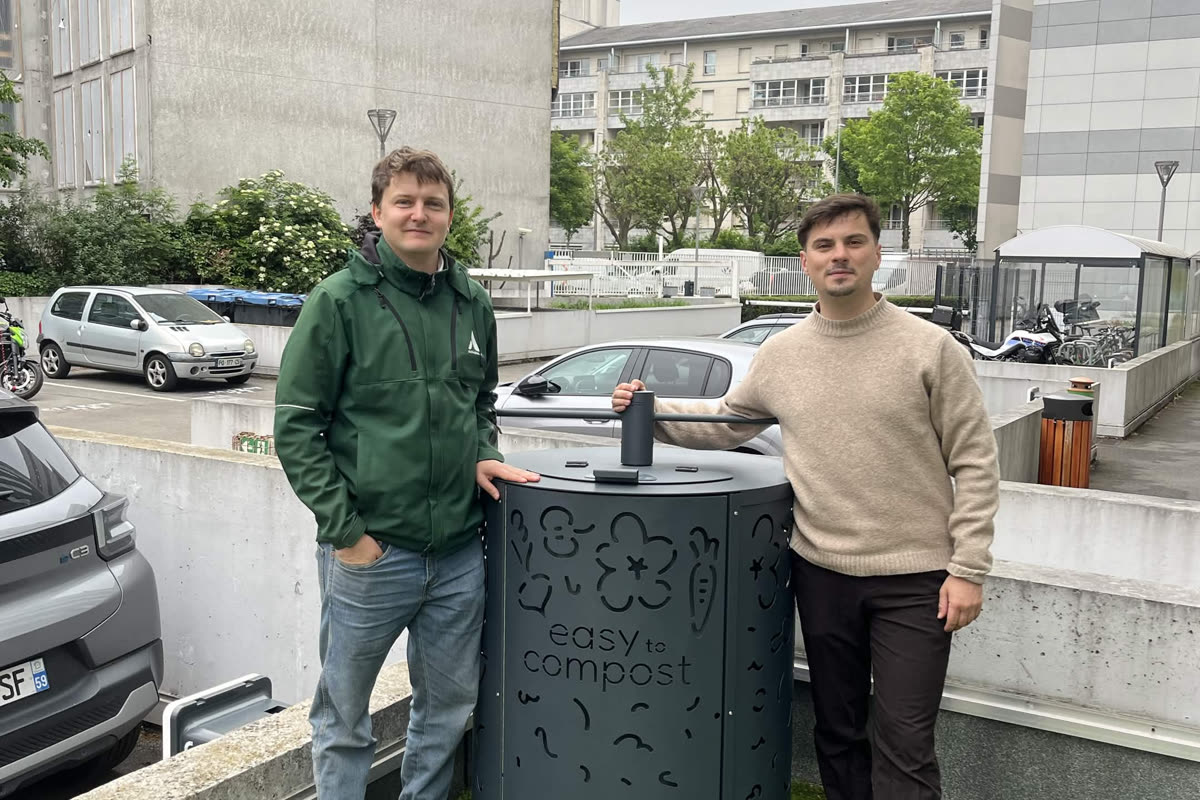
The same composter, in very different places
Head offices, shops, campuses, local authorities, hotels: every photograph comes from a site we have equipped.
Documentation
The composter’s documents, freely available
The datasheet and the emptying guide, exactly as we give them to our customers. Two one-page PDFs.
It is all written down. Even the number of screws.Peazy
PeazyA free remote assessment, a clear recommendation, a quote within 24 hours
Tell us what you produce and where you might put it: we will tell you which model suits, and what it costs.
